
The Cell as the Novel’s Present
The RoomThis flow follows the unnamed prisoner’s confinement as repetitive routines give way to elaborate fantasies and finally to an inability to respond to the world beyond his cell.
increasing Bearing strength in each event
 decreasing
Bearing strength in each eventdecreasingNighttime Counting
Nighttime Counting
An enclosed present
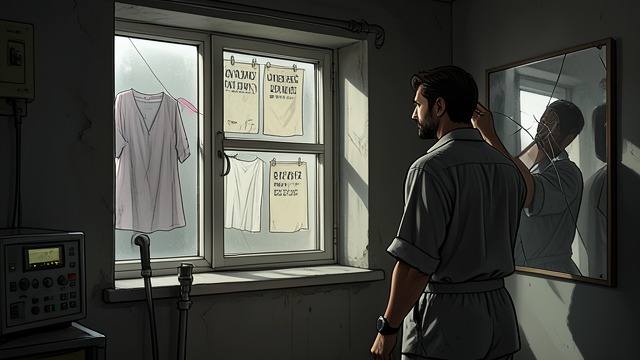
The unnamed prisoner studies the laundry signs through the small window, checks his face in the mirror, and measures the room through repeated acts of looking. Even a new blemish becomes an object for careful inspection. These habits turn the cell’s few visible details into a substitute for activity.
Time without landmarks
He argues with himself about whether the dim room feels bright, then considers sleep as the only way to make time pass more quickly. The lights, the fixed daily cycle, and the blank walls offer no reliable distinction between one hour and another. His thoughts circle toward the belief that time exists chiefly to weigh him down.
A routine taking shape
Rather than settle into sleep, he reaches for memories and small mental tests, including reciting signs and directions. The effort suggests a mind trying to impose order where the prison offers little change. It also establishes the cell as the novel’s governing present: experience will move chiefly through his attention and recollection.
The Cell’s Repeating Rituals
The Cell’s Repeating Rituals
Familiar objects, renewed scrutiny
Back in the cell, the prisoner again checks the sore on his cheek, watches the walls, and reviews the day’s route through holding rooms and court. The hours spent in transit and hearing collapse in memory into a few moments, even though they felt endless while they happened. This mismatch deepens his distrust of ordinary measures of duration.
Repetition as control
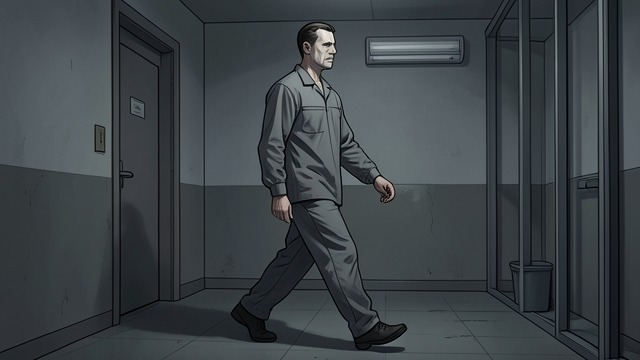
He paces between the door and wall, counts steps, and tries to place each foot exactly where it fell before. The pattern echoes his earlier checking and reciting, but now the ritual is tied to unease and anger. Repetition briefly supplies a task when he feels unable to alter the larger conditions of his confinement.
The limits of the routine
The counting does not change the locked door or restore the hours he has lost. Instead, each completed circuit leads back to the same room and renews the sense that every effort returns him to its starting point. The cell’s narrow geography becomes an outward form of his increasingly circular thought.
The Door and the Meal Line
The Door and the Meal Line
A task becomes an ordeal
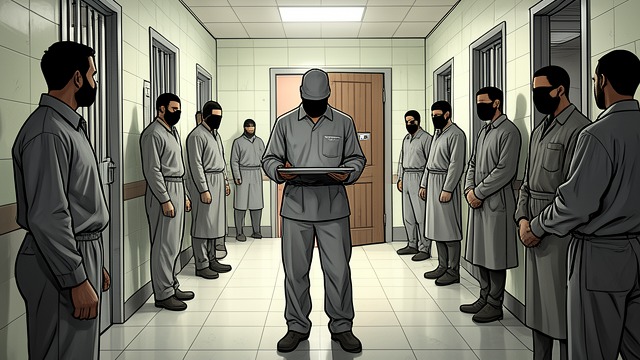
After an intense imagined performance of power, the prisoner wakes to the ordinary sounds of the institution and goes through the meal routine. He must stand in line, accept a tray, find a seat, and return it. What once appeared to be simple procedure now demands more movement and decision than he can manage easily.
Under observation
The bright corridor and the eyes he imagines on him become nearly unbearable. He struggles to carry his tray without spilling it and tries to hide his face and body from the people around him. The scene shifts the novel’s focus from the imagined audience that applauds him to an actual communal space in which he feels exposed and scrutinized.
Safety behind steel
He finally reaches his cell and collapses onto the bed, attending to his breath and the familiar sound of the door locking. Its closure gives him a limited sense of safety, even as it confirms that he remains confined. The movement from the mess hall back into the cell tightens the novel’s central circuit: outward passage is brief, difficult, and followed by return.
The Cell’s Final Shelter
The Cell’s Final Shelter
Rest reduced to inches
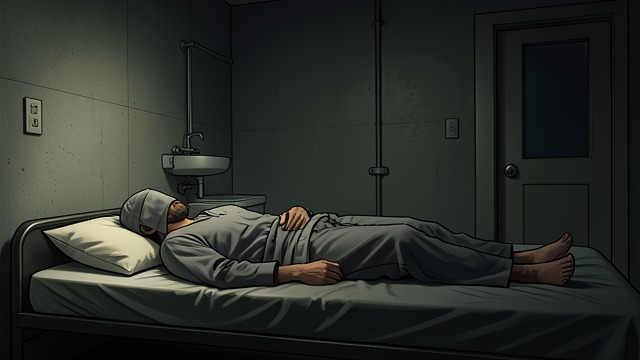
After the prolonged crisis, the prisoner reaches his bed through a series of laborious movements. He weighs whether to pull up the blanket, change position, or simply remain where he is. Each apparently minor choice feels exhausting, and the distance between the sink and bed becomes a measure of how little strength remains.
A narrowed refuge
He closes his eyes against the cell’s light and attends to the sickness in his body. Instead of treating it as an enemy to defeat, he begins to regard it as dependable company. Its persistence offers a bleak form of comfort: whatever else changes, this inner sensation stays with him.
Return without escape
He imagines drifting away but expects to return to the same familiar condition. The cell no longer appears as a temporary obstacle to a promising future; it has become the known place to which his thoughts repeatedly come back. This quiet retreat prepares the final image of a man who can no longer make himself leave the bed or answer the call of court.
The Unanswered Court Call
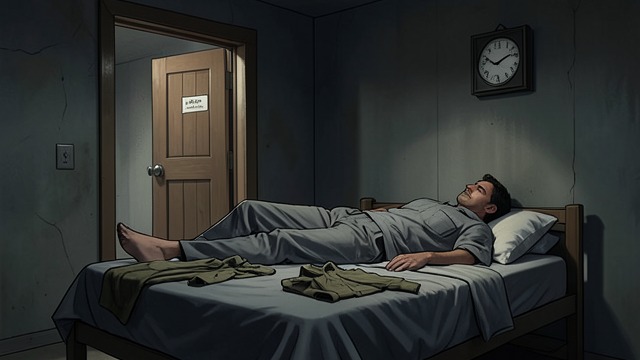
The Unanswered Court Call
An invitation to move
The cell door opens and a set of prison clothes is tossed onto the bed. A voice calls court time, introducing the next external demand with the same institutional directness that has punctuated the prisoner’s days. The call would ordinarily mark a transition from confinement to another stage of legal process.
A body that does not answer
He does not rise, dress, or turn toward the open doorway. Instead, he remains with the bodily sensation he has come to call his friend, his legs moving slowly while his attention withdraws from the command. The novel offers no explanation or diagnosis at this point; it presents nonresponse as the immediate fact.
An unresolved ending
The call echoes the earlier journey to court, but the prisoner’s capacity to participate has changed. Rather than closing with vindication, release, or a completed hearing, the narrative ends with him still inside the institution and unable to act on the summons. The ending makes the cell’s enclosure not merely physical but the boundary of his remaining attention.
At the novel’s opening, during a dimly lit night in the cell
Early in his detention, after he returns from the preliminary hearing
Late in the novel, after the courtroom fantasies and before the closing court call
Near the ending, after the vomiting episode and his return to the bed
At the novel’s final moment, when the guard announces court time
